
Answers for your
next decision.
Find answers about working with Muuvment, implementing AI and using our products.
Frequently asked questions
About Muuvment
What does Muuvment do?
What Muuvment does
Muuvment provides AI consulting, software development and implementation for regulated industries. Our focus is Financial Services and Legal. We redesign workflows, connect systems and train teams to operate practical tools.
How the services relate
We start with the business process and its operating needs, then assess whether to use existing tools, adapt a working solution or build something bespoke. Muuvment Fund Selector is an AI-enabled fund-selection and Know Your Product (KYP) tool developed with Monarch Wealth.
For small and medium-sized law firms and in-house teams, our senior lawyers and engineers support workflow evaluation, Claude Code and Codex training, co-building and implementation.
Our sustainability and ESG experience is part of our company history. Muuvment IQ belongs under AI for ESG, as a working example of research and assessment capabilities that may be relevant to other projects. Explore its product preview.
Preparing for a conversation
Bring a description of the work you would like to improve, the information it uses, who reviews it and where time or uncertainty creates difficulty. You do not need a fully defined technology project.
Does Muuvment work only in financial services?
Muuvment’s sector focus
Muuvment focuses on AI implementation for Financial Services and Legal. We help financial firms improve advice, documentation and client workflows. For small and medium-sized law firms and in-house legal teams, we provide lawyer-led training, workflow design and implementation.
Our earlier sustainability and ESG work is part of the company’s history. Muuvment IQ, our sustainability research and assessment platform, sits under AI for ESG as an example of what we have built.
How we assess fit
Start with the work that needs to improve: the information it uses, the people responsible for it and a result they can review. We assess the value, available tools and controls before recommending an approach.
AI implementation
Does my team need a fully defined AI project?
Getting started with an AI project
A fully defined AI project is not needed to begin. A recurring process and a clear description of what is difficult are a useful starting point. Muuvment can help assess whether an existing tool, configuration, process change, or bespoke AI implementation is the right next step.
Start with the workflow
Describe who performs the task, what information they use, and where the process becomes slow or difficult. Representative examples help make the discussion concrete, provided they are appropriate to share.
Choosing a next step
An existing tool, configuration, process change, or bespoke development may be appropriate. The aim is to address a specific uncertainty before committing to a broader implementation.
How does Muuvment decide whether to build?
How Muuvment decides whether to build
Muuvment starts with the workflow and the problem to solve, then considers available tools, information access, review needs, and likely value. A configuration or process change may be a better fit than custom development. We explain the options so your team can choose a proportionate next step.
Compare the options
We consider the workflow, available tools, permitted data access, review requirements, and likely value. A configuration or process change may be more suitable than bespoke development.
Test what is uncertain
The Qualify, Prove, and Decide stages help clarify the workflow, test key assumptions with appropriate examples, and support a decision to proceed, revise, or stop.
How long does implementation take?
AI implementation timelines
There is no single timeline for AI implementation because scope, data readiness, integrations, testing, and decision-making all affect delivery. We define the milestone, deliverables, and dependencies before proposing a schedule, so a prototype, pilot, and production rollout are clearly distinguished.
Milestones matter
A demonstration explains an idea; a prototype tests part of it; a pilot adds operational learning; and a production rollout requires agreed readiness and operating arrangements. Ask which milestone a proposed schedule covers.
Source availability, permitted access, integrations, decisions, and reviewer availability can all affect timing. A useful schedule states its assumptions and dependencies.
Can we stop after testing?
Stopping after an AI test
Testing can be a decision point: your sponsor can proceed, adjust the approach, or stop based on the evidence. We agree the scope, decision criteria, and exit deliverables before work begins, so your team knows what it will receive if it does not continue.
Agree the decision and exit
Testing should address an agreed uncertainty and give the sponsor useful evidence. Before the work starts, establish the decision criteria, what documentation or other deliverables will be provided, and the commercial terms if the work does not continue.
Fund Selector
Is Fund Selector an off-the-shelf product?
Fund Selector availability
Muuvment Fund Selector starts from an existing working product and its capabilities, developed with Monarch Wealth. We assess how it could fit your firm, then tailor the workflow to your methodology, data and systems. An initial conversation establishes the deployment scope; this is not a self-service software subscription.
Scoping the workflow
Together, we establish the eligible fund universe, selection criteria, data sources, user access, review steps and connections to your systems. The scope identifies which components can be reused, which need configuration and which require new development.
We also agree data and software licences, hosting, costs and support. Your firm’s requirements determine the implementation and commercial terms.
Read the Monarch case study or discuss Fund Selector for your firm.
Does Fund Selector make independent investment recommendations?
Fund Selector and investment judgement
The Muuvment Fund Selector supports firm-defined fund research and review; it does not replace a firm’s product-review process, advisor judgement, or client-suitability responsibilities. The firm defines the criteria and review arrangements for its workflow.
Where review remains
The firm defines criteria and permitted information. An advisor or designated reviewer assesses results in the context of their responsibilities. The engagement should clarify how incomplete information, exceptions, explanations, and review records are handled.
What does deterministic matching mean?
Deterministic matching explained
Deterministic matching involves applying defined rules to eligible inputs. Each AI-generated explanation is a separate output and should be checked against its sources and the criteria.
Matching and generated explanations
Applying defined matching criteria and preparing a written explanation are separate functions. Review the criteria, inputs, and source material alongside any generated explanation. Ask how missing information is handled and what a reviewer can inspect in the particular implementation.
Can we see the implementation?
The Monarch case study describes the workflow, and we will be happy to provide a demonstration when you schedule a call. A short discussion can help us explore your requirements.
Working with us
What will our team need to contribute?
Your team’s role in an AI implementation
Your team can help us understand the process, share appropriate examples, and review whether proposed outputs are useful. A process owner is especially helpful; technology, data, and governance colleagues may be involved depending on scope. We agree roles and responsibilities together before implementation begins.
People and information
A process owner can explain how the workflow operates and help assess whether a change is useful. Subject-matter reviewers can assess outputs; technology, data, and governance colleagues may help confirm access, integration, and operating requirements.
Before work begins, agree who supplies permitted examples, reviews results, makes decisions, and prepares for handover. Please do not send confidential client files for an initial fit conversation.
What happens in the first conversation?
Your first conversation with Muuvment
The first conversation is a friendly discussion about your workflow, current challenges, and what a useful next step might look like. You do not need a finished business case. A simple process description is helpful; please do not send confidential client files for an initial conversation.
What is helpful to prepare
A short description of the process, the people involved, the current difficulty, and the result you hope to improve is enough. Approximate workload or time spent can help explain the context.
If there is a potential fit, a later discussion may define a scoped investigation or test. The first conversation does not determine final feasibility, price, or a complete business case.
How is the engagement priced?
Pricing a bespoke AI engagement
Muuvment prices work around the agreed scope rather than a universal package. Data preparation, licences, integration, evaluation, deployment, training, and ongoing support can all affect cost. After understanding your workflow, we will discuss the work involved and the commercial terms for your engagement.
What affects the scope
Discuss the workflow, data preparation, source licences, integrations, evaluation, deployment, training, and ongoing operating needs. These determine the work to be priced.
Separate implementation costs from recurring hosting, provider, data-licence, and support costs. The proposal should clarify what is included, what depends on third parties, and how scope changes are handled.
Who owns the software and operates the workflow?
Ownership and operation
Ownership and ongoing operation are agreed as part of each engagement. Custom code, reusable components, third-party licences, data rights, hosting, and support can have different terms. We discuss these early so your team understands its responsibilities and what handover or ongoing support includes.
Agree rights and responsibilities
Custom code, reusable components, third-party software, source data, and licences may have different terms. Business accountability is distinct from intellectual-property ownership.
Discuss hosting, access, documentation, training, maintenance, and support. Agree how your team will operate the workflow and what access or materials are provided at handover or if the engagement ends. The contract determines the specific rights.
Talk with Muuvment about your requirements.
AI governance
When should AI governance be considered in an AI project?
AI governance is most useful when considered from the start, while the team is defining the workflow, permitted information, risks and decision owners. Those choices can then inform testing, implementation and handover. Muuvment’s approach is Qualify → Prove → Decide → Embed → Handover, with points to discuss governance as the work progresses. Muuvment’s AI Governance Toolkit can help a team prepare questions and capture initial decisions; it is a starting resource, not a substitute for assessing the specific use case and obligations.
How does Muuvment address AI governance during implementation?
Discuss your governance questions with Muuvment in an initial implementation discussion: who owns the workflow, which information may be used, what review is needed, and how exceptions should be handled. The team can test a representative use case before agreeing a next step, then define operating responsibilities and handover needs in the project scope. Specific controls and deliverables are agreed for each engagement. Teams looking to prepare internally can use Muuvment’s AI Governance Toolkit to structure initial discussions; it does not replace project-specific scoping or advice on applicable obligations.
Discuss your implementation with Muuvment.
How should people review AI outputs?
Organizations should decide who is responsible for reviewing AI outputs, what evidence or source material reviewers need, and when an output must be corrected or escalated. The appropriate level of review depends on the consequences of the decision and the workflow. AI output should not be treated as verified simply because it is clearly written; reviewers should check material claims against suitable sources.
What do explainability and auditability mean for AI governance?
Explainability means people can understand the basis for an AI-supported result to the degree needed for the use case. Auditability means relevant decisions, inputs, reviews and changes can be traced through appropriate records. What needs to be explained or recorded varies by system and context, so these requirements should be agreed during scoping rather than assumed to be available by default.
Does Muuvment certify AI systems or guarantee compliance?
Muuvment’s implementation support is not a certification and cannot guarantee that an AI system complies with every law, regulation or internal policy. Compliance depends on the organization, use case, system design and applicable requirements. Your legal, compliance and risk teams should assess obligations and approve the controls needed for deployment.
What should we prepare for an AI governance discussion?
Bring a short description of the workflow, the problem you want to solve, who uses or is affected by it, and what decisions depend on the output. It also helps to identify likely information sources, jurisdictions, existing policies, review roles and the person accountable for the process. Muuvment’s AI Governance Toolkit offers prompts and templates your team can use to organize these questions before a discussion. You can start with a high-level description; do not send confidential files until appropriate arrangements are agreed.
How can AI governance support privacy and data protection?
Privacy and data protection are easier to assess when a team identifies what information a workflow needs, why it is used, who may access it, and how long it should be retained. Consider whether personal or confidential information is necessary and what review or access limits apply. Muuvment’s published Privacy Policy describes personal-data practices; confirm current, service-specific arrangements directly with Muuvment.
How can a company govern and implement AI effectively?
Start with a defined business workflow, not a tool or a broad policy in isolation. Describe the work to improve, the people who use or rely on it, and how you will recognize a useful result. Establish a baseline where possible so the team can compare the proposed approach with current time, cost, quality and risk.
Before relying on an AI-supported workflow, agree:
- which information and systems it may use, and who can access them;
- what the AI may prepare or recommend, and which decisions remain with people;
- how reviewers will check outputs, including difficult or incomplete cases;
- what happens when information is missing, conflicting or unsupported;
- who owns the workflow, approves changes and responds to issues; and
- how performance, user feedback and changes will be reviewed after release.
Test the approach with representative tasks and agreed acceptance criteria before deciding whether to proceed, adapt it or stop. Then plan integration, training, operating responsibilities and handover around the actual workflow. Applicable legal, privacy, security and regulatory obligations depend on the organization and use case, so identify and validate them with the appropriate specialists.
Muuvment’s AI Governance Toolkit provides adaptable assessments, a risk-register template, sample policy material and checklists to help a team prepare and record its decisions. It is a practical starting point, not certification, legal advice or a substitute for assessing your specific obligations.
Talk with Muuvment to discuss how governance and implementation could fit a particular workflow. Do not send confidential files before appropriate arrangements are agreed.
Muuvment IQ
What data do you collect?
Information described in Muuvment’s Privacy Policy
Muuvment’s published Privacy Policy describes collecting names, email addresses and IP addresses to set up accounts and deliver services. Depending on a client’s choices, it may also describe workplace or location details for reporting and analytics. The policy page was last updated in 2020, so please contact Muuvment to confirm what applies to your current Muuvment IQ account or a specific engagement.
How do you protect my privacy?
Privacy choices and questions
Muuvment’s published Privacy Policy says people can choose not to allow personal data to be used and can opt out, while noting that this may affect their experience or services. It identifies Muuvment as the data controller and lists privacy@muuvment.com for privacy questions. The policy page was last updated in 2020 and does not describe specific technical safeguards or company-confidentiality controls; ask Muuvment about the arrangements for a particular service or engagement.
How does the Sustainability Assessment interview chat process work?
The Sustainability Assessment interview is a conversational experience. Muuvment IQ asks you questions, tries to find the answers in the documents you selected, and considers your typed responses. You can then review the generated report and recommendations, and revise your answers to make refinements.
What if I’m not satisfied with my responses during the Sustainability Assessment interview?
You can revise your answers before generating the report by selecting the “Disagree” button or editing specific questions.
What happens if I upload the wrong document?
You can delete incorrect documents by clicking the bin icon .
Documents that have been used and are connected to reports cannot be deleted.
To double-check document content, view it using the eye icon .
Can I upload documents for analysis, and how does it work?
Yes, you can upload documents, select documents from the resource library, or proceed without documents.
Documents are shared resources for team members on the same account. The system prevents duplication by enforcing unique file names.
What topics are available for Sustainability Assessment?
Sustainability Assessment has various topics namely:
- Climate change
- Contribution to Society
- CSRD
- Double Materiality
- Employee Management
- Equity, Diversity & Inclusion
- Governance
How do I begin a Sustainability Assessment with Muuvment IQ?
- Sign in to Muuvment IQ.
- Select the Sustainability Assessment.
- Choose a Sustainability topic.
- Upload or select documents for analysis.
- Start the interview.
What is the Muuvment IQ Sustainability Assessment tool?
Muuvment IQ Sustainability Analysis is a strategic assessment tool designed to evaluate an organization’s sustainability practices by collecting insights from key stakeholders through AI-driven interviews. The tool analyzes ESG (Environmental, Social, and Governance) factors and generates a detailed report. Users interact with the system to upload relevant documents and answer interview questions, making it an essential tool for shaping or refining sustainability strategies.
How long does it take to generate a Sustainability Assessment Report?
The time required to complete the Muuvment IQ Sustainability Assessment interview may vary based on the level of detail in the documents you provide.
Once the interview is finalized, the system typically generates the report within a few minutes.
What format is the Sustainability Assessment Report generated in?
The Muuvment IQ Sustainability Assessment report is generated in PDF format.
Can I view the interview responses after generating the Sustainability Assessment Report?
Yes, you can view the full interview chat in HTML format by selecting the “View Interview” button after the report is generated.
Can I access previously generated Sustainability Assessment Reports?
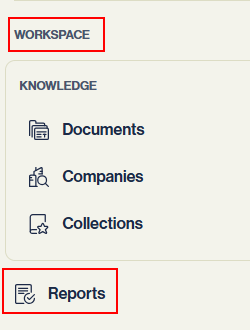
Yes, Muuvment IQ Sustainability Assessment Reports can be accessed from the Reports menu within workspace.
What customization options are available for Sustainability Assessment Report generation?
You can review and revise the interview answers before confirming the generation of the final Sustainability Assessment Report.
How does Muuvment IQ ensure accurate and comprehensive Sustainability Assessment?
By combining AI-driven interviews with document analysis, Muuvment IQ Sustainability Assessment provides insights and actionable recommendations for sustainability strategies.
Can I use Muuvment IQ Sustainability Assessment without uploading any documents?
Yes, you can work through the Muuvment IQ Sustainability Assessment interview without uploading any documents.
How do I start the Sustainability Assessment interview and interact with Muuvment's AI agents?
After confirming your documents, you’ll proceed to the interview phase.
To begin, click on the "Start Interview" button. This will open the interview chat screen, where you will interact with the AI.
The AI agents will ask a series of structured questions related to the topic you selected and provide responses based on the document used for analysis. You will then review each response and indicate whether you agree or disagree.
If you disagree, click "Edit", enter your revised response in the message input box, and then click "Send".
If you agree, simply click "Okay" to proceed.
What is Muuvment IQ Assistant?
Muuvment IQ Assistant enables you to ask questions on ESG, Sustainability, and related topics, delivering thorough, expert-backed answers to help you stay informed and make impactful decisions.
What can Muuvment IQ Assistant do?
Muuvment IQ Assistant supports you with creating content for business deliverables and offers insights on topics related to Sustainability and Environmental, Social, and Governance (ESG) matters.
Examples
- Policy creation: develop policies that foster diversity, equity, and inclusion, ensuring a more inclusive and equitable organizational environment.
- Program development: design programs to achieve specific outcomes and promote sustainable practices within your organization, ensuring alignment with long-term sustainability goals.
- Insights: Gain valuable insights into the latest sustainability reporting and compliance requirements, including the Corporate Sustainability Reporting Directive (CSRD) and other frameworks such as the Global Reporting Initiative (GRI), Task Force on Climate-related Financial Disclosures (TCFD), and Sustainability Accounting Standards Board (SASB). Stay updated on evolving regulations to ensure your organization meets all necessary environmental, social, and governance (ESG) reporting obligations.
What is IQ Sustainability Knowledge Base (SKB)?
The IQ Sustainability Knowledge Base (SKB) is a curated and expertly maintained repository of sustainability-related content. It includes trusted, up-to-date ESG and sustainability frameworks, regulations, standards, and academic sources.
What is a Company Knowledge Base?
The Company Knowledge Base is a private, company-specific repository of internal documents, reports, strategies, and policies.
What are Collection Knowledge Bases?
Collection Knowledge Bases are user-defined repositories that group together documents based on specific themes, topics, projects, or sources. These collections can include both public and private content, allowing for focused analysis and comparison across related materials.
Looking for a product walkthrough? Browse Muuvment IQ guides →
Still have a question?
Tell us what you want to understand or what work you hope to improve.
Talk with MuuvmentContact Muuvment